 Skip to content

What Is The Amazon A10 Algorithm

If you are still optimizing your Amazon listings like it is 2020, you are fighting a losing battle.
The days of stuffing keywords into titles and blasting PPC to force a ranking are over.
The Amazon A10 Algorithm represents a fundamental shift in how the marketplace evaluates products.
While its predecessor, A9, focused heavily on keyword relevance and advertising spend, A10 is designed to prioritize customer experience, authority, and off-site signals.
In 2026, Amazon doesn’t just want to know if your product matches a keyword. It wants to know if customers trust your product enough to seek it out.
This article breaks down the 9 critical ranking factors of the A10 algorithm and how you can leverage them to dominate search results.
Amazon A9 vs. Amazon A10 Algorithm: What Changed?
The transition from A9 to A10 wasn’t a single update but a gradual evolution toward a more holistic view of product value.
- A9 Era: “Pay to Play.” High PPC spend could directly force organic rankings. Keyword density was king.
- A10 Era: “Earn to Rank.” Organic sales and external traffic are weighted far more heavily than PPC sales. Customer satisfaction metrics (returns, reviews) can make or break a listing.
The 9 Core Ranking Factors of the Amazon A10 Algorithm
To rank on Page 1 in 2026, you must optimize for these weighted factors.
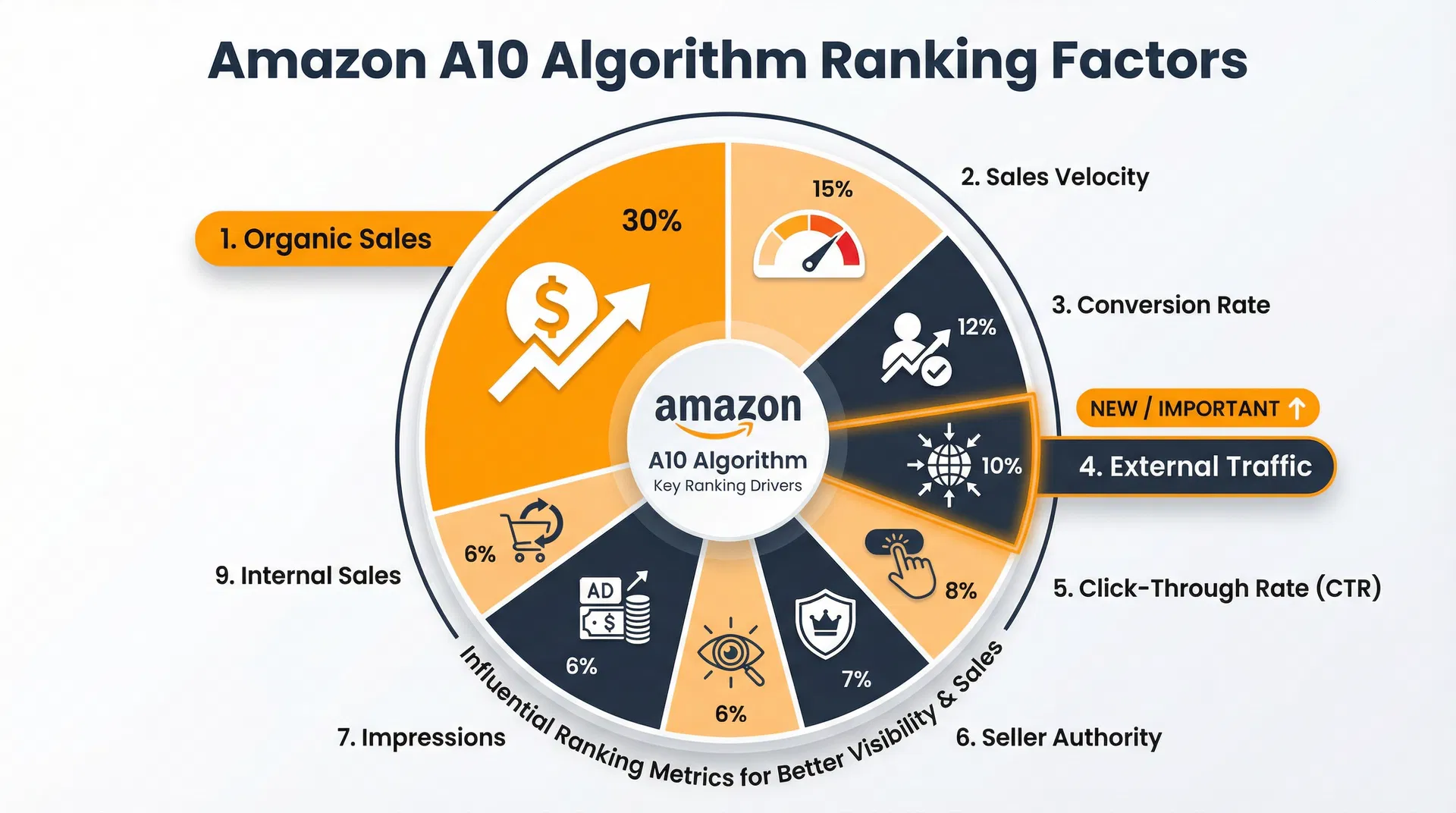
1. Organic Sales (The Heavyweight)
Sales that occur naturally—without an ad click—are the strongest signal of relevance.
A10 views organic purchases as a vote of confidence from the shopper.
- Strategy: Focus on SEO optimization to appear for long-tail keywords where you can win organic clicks easily.
2. Sales Velocity
It’s not just about total sales, but the speed of sales.
Selling 10 units a day consistently is better than selling 300 units in one day and zero for the rest of the month.
- Benchmark: New products need to hit 10-50 units/month quickly to escape the “sandbox.”
3. Conversion Rate (CVR)
Amazon doesn’t want to show products that people don’t buy.
If your listing gets 1,000 clicks but only 5 sales, your ranking will tank.
- 2026 Benchmark: A “good” CVR is now 10-15%. Top performers in niches like supplements or beauty often exceed 20%.
4. External Traffic (The Game Changer)
This is the biggest shift in Amazon A10 Algorithm.
Amazon loves it when you bring new customers to their site. Traffic from TikTok, Google Ads, or email lists carries significantly more weight than internal PPC traffic.
- Strategy: Use Amazon Attribution to track off-site campaigns. Amazon often rewards this with a “Brand Referral Bonus,” refunding 10% of sales fees.
5. Click-Through Rate (CTR)
Before a customer can convert, they must click.
Your main image and title are the only tools you have to win the click in search results.
- Tip: Split test your main image using PickFu or Amazon’s “Manage Your Experiments” tool. A 1% increase in CTR can drastically improve ranking.
6. Seller Authority
A10 looks at the seller, not just the product.
Factors like your total time on Amazon, feedback rating, return rate, and inventory health score (IPI) all influence your ability to rank.
- Warning: High Order Defect Rates (ODR) will suppress your entire catalog, not just the affected product.
7. Impressions
How many times has your product been seen?
While less important than clicks, high impression volume signals to Amazon that your product is relevant to a broad set of keywords.
8. PPC Sales
Paid sales still matter, but their direct impact on organic ranking has diminished. PPC is now a facilitator—it buys you the visibility to generate the organic sales and reviews that actually build rank.
9. Internal Sales
Sales generated from “Frequently Bought Together” or “Compare with similar items” sections.
These cross-sells are powerful signals of product affinity.
How to Optimize for A10 in 2026
- Diversify Traffic: Do not rely 100% on Amazon PPC. Build an email list or run Meta ads to drive external traffic.
- Protect Your CVR: Don’t target broad keywords that bring low-intent traffic. It hurts your conversion rate and, consequently, your ranking.
- Focus on Retention: A10 rewards high Customer Lifetime Value (CLV). Use “Subscribe & Save” and high-quality packaging to encourage repeat purchases.
Conclusion
The Amazon A10 algorithm is smarter, fairer, and harder to game. It rewards brands that build genuine demand and deliver a great customer experience.
By aligning your strategy with these 9 factors—especially organic sales and external traffic—you can build a ranking moat that competitors can’t cross with ad spend alone.
Is your listing A10-optimized?
Prolific Zone’s GEO Audit analyzes your current listing against these 2026 ranking factors to find immediate opportunities for growth.