 Skip to content

Amazon PPC Strategy in 2026
If you are selling on Amazon in 2026, organic ranking alone is no longer enough to scale your business. The marketplace is saturated, and the top spots are fiercely contested. To drive consistent, profitable sales, you need a robust Amazon PPC strategy.
Amazon Pay-Per-Click (PPC) advertising is the engine that drives visibility, accelerates product launches, and ultimately improves your organic ranking. However, without a precise strategy, PPC can quickly drain your budget. This comprehensive guide will walk you through exactly how to build, structure, and optimize a highly profitable Amazon PPC strategy in 2026.
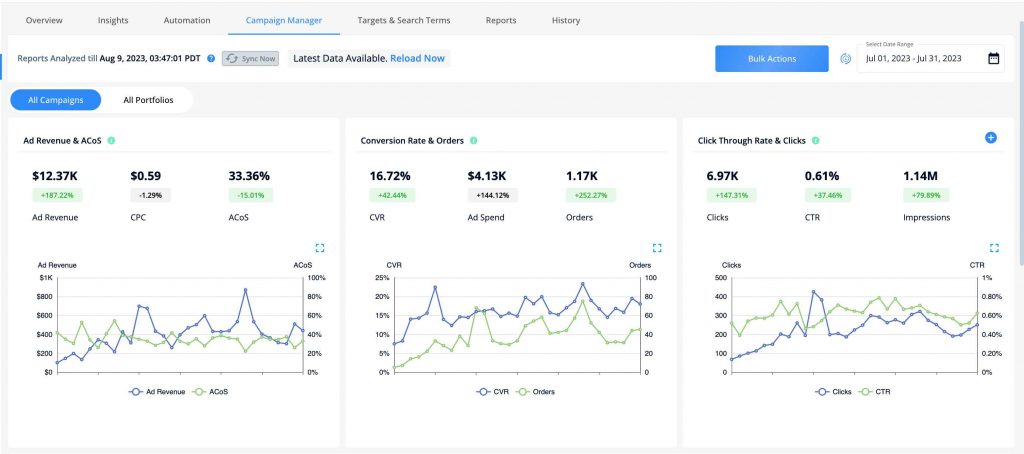
An example of an Amazon PPC campaign manager dashboard tracking ACoS, spend, and revenue.
What is Amazon PPC and Why Does it Matter?
Amazon PPC is an auction-style advertising system where sellers bid on specific keywords or products to display their items prominently in Amazon search results and on competitor product pages. You only pay Amazon when a shopper actually clicks on your ad—hence the name “Pay-Per-Click.”
In 2026, an effective Amazon PPC strategy is more critical than ever. With the introduction of the Amazon COSMO AI Search Algorithm, Amazon is prioritizing intent and relevance. Paid advertising helps you prove to the algorithm that your product is highly relevant to specific customer searches.
A well-executed PPC campaign achieves three primary goals:
- Increases Product Visibility: It puts your product in front of shoppers who are actively looking to buy.
- Drives Immediate Sales: Unlike organic SEO which takes time, PPC can generate sales from day one.
- Boosts Organic Ranking: Amazon rewards products that convert. Sales generated through PPC improve your product’s sales velocity, which directly boosts your organic ranking [1].
The Three Types of Amazon Advertising
Before diving into advanced strategies, you must understand the tools at your disposal. Amazon offers three primary ad types, each serving a unique purpose in your marketing funnel.
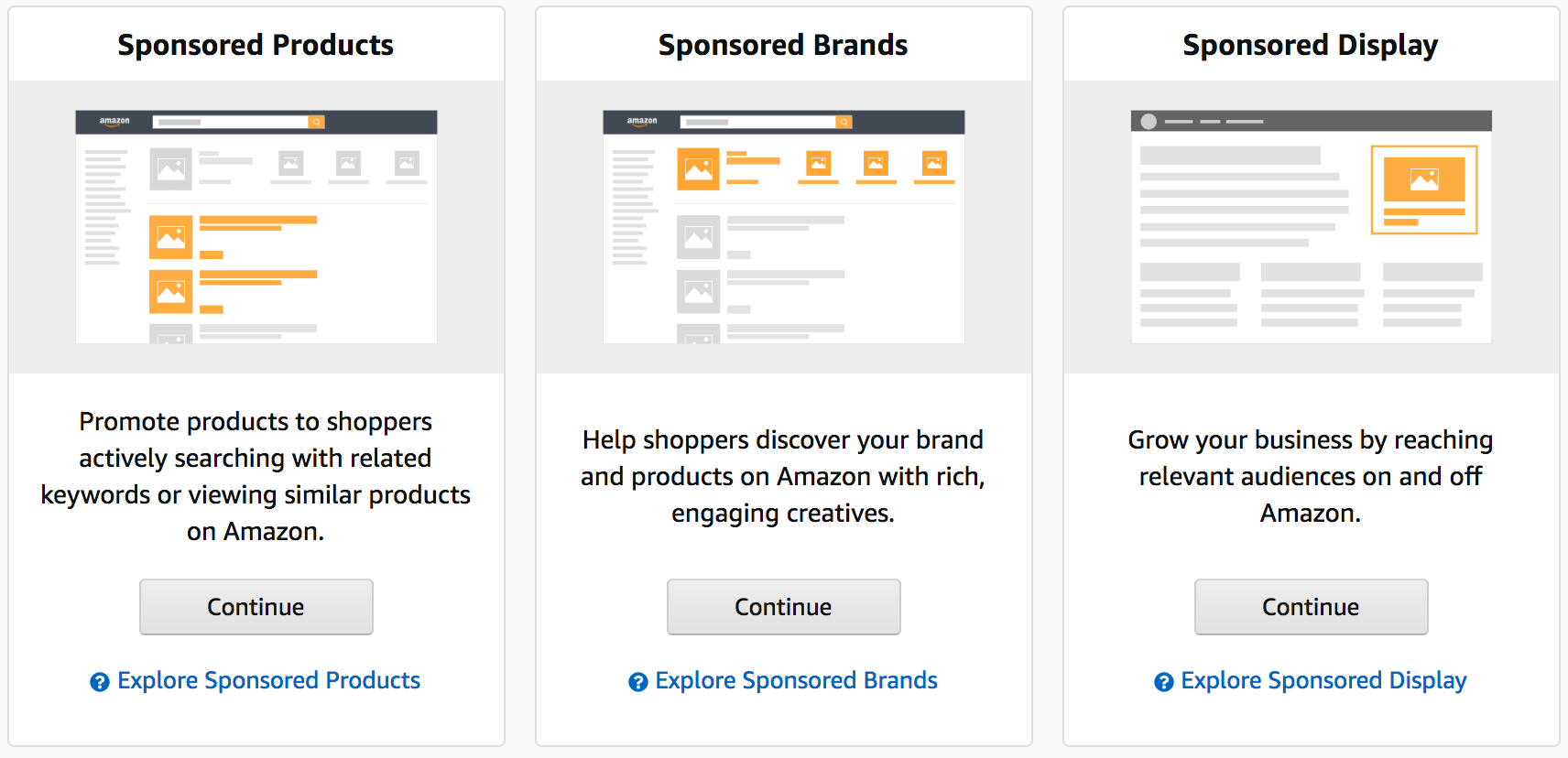
The three main types of Amazon Advertising: Sponsored Products, Sponsored Brands, and Sponsored Display.
1. Sponsored Products
Sponsored Products are the foundation of any Amazon PPC strategy. These ads look almost identical to organic search results, seamlessly blending into the shopper’s experience. They appear at the top of search results, within search pages, and on product detail pages.
Best For: Driving direct sales, launching new products, and targeting specific high-intent keywords. If you are new to Amazon advertising, the majority of your budget should go here.
2. Sponsored Brands
Sponsored Brands ads (formerly Headline Search Ads) appear at the very top of the search results page, above Sponsored Products. They feature your brand logo, a custom headline, and a collection of up to three products.
Best For: Building brand awareness, protecting your brand name from competitors, and capturing top-of-funnel shoppers who are browsing a category rather than a specific item.
3. Sponsored Display
Sponsored Display ads are unique because they allow you to retarget shoppers both on and off Amazon. These ads can appear on Amazon product detail pages, customer review pages, and even on third-party websites and apps across the web.
Best For: Retargeting shoppers who viewed your product but didn’t purchase, cross-selling to your existing customers, and capturing sales from competitors’ listings. For a deeper dive into advanced retargeting, read our guide on What Is Amazon DSP? The Guide to Retargeting & Growth.
Step 1: Foundation – Keyword Research and Listing Optimization
A successful Amazon PPC strategy begins long before you create your first campaign. If your listing is not optimized, your ads will fail. Period.
Conduct Deep Keyword Research
Keywords are the bridge connecting shopper intent to your product. You must identify the exact terms your target audience uses.
- High-Intent Keywords: Focus on “long-tail” keywords that indicate a shopper is ready to buy (e.g., “stainless steel garlic press” rather than just “garlic press”).
- Competitor Analysis: Use tools like Helium 10 or Jungle Scout to reverse-engineer your competitors’ top-ranking keywords.
- Search Term Reports: If you have run ads before, your historical Search Term Reports are a goldmine of data showing exactly what people typed before buying your product.
Optimize Your Listing for Conversion (CRO)
If your ad gets clicked but the shopper doesn’t buy, you lose money. Conversion Rate Optimization (CRO) is vital. Ensure your listing has:
- High-Quality Images: Include lifestyle images, infographics, and 3D renderings if applicable.
- Compelling Copy: Write clear, benefit-driven bullet points and a title that includes your primary keywords.
- A+ Content: Utilize Enhanced Brand Content to tell your brand story and answer common customer questions visually.
If you need expert help ensuring your listings are primed for traffic, explore our Listing Creation and Optimization services.
Step 2: Structuring Your Amazon PPC Campaigns
Campaign structure is the secret to controlling your ad spend and maximizing profitability. A messy account leads to wasted budget and missed opportunities. We recommend a structured approach separating discovery from scaling.
The Discovery Phase: Automatic Campaigns
Automatic campaigns allow Amazon’s algorithm to decide when to show your ad based on your listing’s content.
Strategy: Set up an Auto campaign with a conservative budget and moderate bids. Let it run for 14 to 30 days. The goal here is not necessarily to be highly profitable, but to harvest data. You want Amazon to find new search terms and ASINs that convert for your product.
The Scaling Phase: Manual Campaigns
Once your Auto campaign has gathered data, it is time to take control. Download your Search Term Report and identify the keywords that generated sales at an acceptable ACoS (Advertising Cost of Sales).
Move these winning keywords into Manual campaigns. We recommend segmenting your manual campaigns by match type:
- Broad Match Campaign: Use this for ongoing keyword discovery around your core terms.
- Phrase Match Campaign: Use this to target specific keyword phrases while allowing for slight variations.
- Exact Match Campaign: This is where your most profitable, high-converting keywords live. Because you know these words drive sales, you can afford to bid higher and aggressively defend your placement.
Brand Defense Campaigns
Never let competitors steal your branded search traffic. Create a specific campaign targeting your own brand name and product names. Bids here are typically very cheap, and the ROI is incredibly high.
Step 3: Bidding Strategies and Optimization
Setting up campaigns is only the beginning. The real magic happens during optimization.
Understanding ACoS and TACoS
To optimize effectively, you must understand your metrics.
- ACoS (Advertising Cost of Sales): This measures the direct efficiency of your ads (Ad Spend ÷ Ad Revenue). If your profit margin is 30%, and your ACoS is 20%, your ads are profitable.
- TACoS (Total Advertising Cost of Sales): This measures your ad spend relative to your total revenue (organic + paid). A decreasing TACoS indicates that your PPC is successfully driving organic growth.
Routine Bid Optimization
Optimization should be a weekly routine.
- Increase Bids on Winners: If a keyword has a low ACoS and is generating sales, incrementally increase the bid to capture more impressions and dominate top-of-search.
- Decrease Bids on Bleeders: If a keyword is generating clicks but no sales (or sales at an unprofitably high ACoS), lower the bid.
- Utilize Negative Keywords: This is crucial. If your Auto or Broad campaigns are showing your ads for irrelevant terms (e.g., you sell a “garlic press” but show up for “coffee press”), add those terms as Negative Exact keywords. This instantly stops Amazon from wasting your budget on bad traffic.
Step 4: Advanced Strategies for 2026
To truly dominate your category, you must utilize advanced tactics.
Dayparting
Analyze your sales data to determine what times of day or days of the week your products convert best. You can use specialized software to increase bids during peak buying hours and lower them during dead zones, maximizing your budget efficiency.
ASIN Targeting (Product Attribute Targeting)
Instead of just targeting keywords, target your competitors’ products directly. Find competing products that are priced higher than yours, have lower ratings, or have inferior listings. Place your Sponsored Products or Sponsored Display ads directly on their detail pages to steal their traffic.
When to Hire an Amazon PPC Agency
Managing Amazon PPC is complex, time-consuming, and constantly changing. Many sellers reach a point where managing ads in-house stunts their growth. If you are struggling to lower your ACoS, or if you simply lack the time to analyze search term reports weekly, it may be time to partner with experts.
At Prolific Zone, our accredited eCommerce marketing experts specialize in maximizing profits, not just clicks. We focus on Total ACoS (TACoS) and overall profitability, utilizing advanced bidding strategies to dominate top-of-search placements.
“Working with Prolific Zone over the last 7 years completely transformed our Amazon business. We went from $40,000 per month to a record high of over $700,000. Their expertise in PPC management and listing optimization is unmatched.” – Doug Godkin, MDS
If you are ready to scale your brand sustainably, Discover Our Services and let us build a custom Amazon PPC strategy for your business.
Step 5: Understanding Amazon DSP (Demand Side Platform)
As your Amazon business matures, Sponsored Products and Sponsored Brands will eventually hit a point of diminishing returns. You will have captured the majority of the “bottom-of-funnel” shoppers who are actively searching for your keywords. To continue scaling your Amazon PPC strategy, you must look beyond the search bar. This is where Amazon DSP comes in.
Amazon DSP (Demand Side Platform) is a programmatic advertising platform that allows brands to buy display, video, and audio ads both on and off Amazon.
Unlike Sponsored Products, which target keywords, DSP targets audiences based on their behavior and demographics.
Why Amazon DSP is Crucial for 2026
In 2026, the customer journey is rarely linear. A shopper might see your product on Amazon, leave to read a review on a blog, check their email, and then return to Amazon days later to make a purchase. Amazon DSP allows you to follow that shopper across the internet.
- Retargeting: This is the most powerful feature of DSP. You can serve ads to shoppers who viewed your product but didn’t buy, reminding them to complete their purchase.
- Competitor Conquesting: You can target shoppers who have viewed or purchased your competitors’ products, offering them your superior alternative.
- In-Market Audiences: Amazon knows what shoppers are currently in the market for based on their browsing history. You can target these high-intent audiences even before they search for your specific keywords.
How DSP Integrates with Your PPC Strategy
Amazon DSP should not replace your standard PPC campaigns; it should complement them. A holistic Amazon advertising strategy uses Sponsored Products to capture demand at the bottom of the funnel, Sponsored Brands to build awareness at the top, and DSP to re-engage shoppers throughout the entire journey.
If you are ready to explore the power of programmatic advertising, our team at Prolific Zone can help you integrate Amazon DSP into your overall growth strategy.
Step 6: Leveraging Amazon Attribution
One of the biggest challenges for eCommerce brands in 2026 is measuring the impact of off-Amazon marketing efforts. If you are running Facebook Ads, Google Ads, or influencer campaigns that drive traffic to your Amazon listing, how do you know which campaigns are actually generating sales?
Enter Amazon Attribution.
Amazon Attribution is an advertising measurement console that gives marketers insight into how their non-Amazon marketing channels perform on Amazon. It provides unique tracking URLs (tags) that you can use in your external campaigns.
The Benefits of Amazon Attribution
- Accurate ROI Measurement: Finally, you can see exactly how many Amazon sales your Facebook Ads or email newsletters generated, allowing you to calculate an accurate Return on Ad Spend (ROAS) for external channels.
- Optimization of External Campaigns: By identifying which external channels and creatives drive the highest conversion rates on Amazon, you can reallocate your budget to the most effective campaigns.
- The Brand Referral Bonus: Amazon actively encourages sellers to drive external traffic. Through the Brand Referral Bonus program, Amazon credits you an average of 10% of the product price for sales generated through Amazon Attribution tags. This effectively lowers your Amazon referral fees and improves your profit margins.
Integrating Amazon Attribution into your overall Amazon PPC strategy is essential for brands that want to scale aggressively and dominate their category both on and off the marketplace.
Step 7: The Importance of Amazon Brand Analytics
Data is the lifeblood of a successful Amazon PPC strategy. While the standard Advertising Console provides valuable metrics like Impressions, Clicks, and ACoS, it only tells part of the story. To truly understand your customers and optimize your campaigns, you need Amazon Brand Analytics.
Available exclusively to Brand Registered sellers, Amazon Brand Analytics offers powerful insights into shopper behavior, search trends, and competitor performance.
Key Reports in Amazon Brand Analytics
- Amazon Search Terms Report: This report shows the most popular search terms on Amazon during a specific timeframe. More importantly, it reveals the top three products that shoppers clicked on after searching for that term, along with their click share and conversion share. This is invaluable for identifying new, high-volume keywords to target in your PPC campaigns.
- Repeat Purchase Behavior Report: Understanding your customer lifetime value (LTV) is crucial for setting accurate PPC bids. If you know that 30% of your customers buy your product again within 60 days, you can afford to bid higher and accept a higher initial ACoS to acquire that customer.
- Market Basket Analysis: This report shows which other products shoppers frequently purchase at the same time as yours. This insight can help you identify cross-selling opportunities, create product bundles, and target complementary products with Sponsored Display ads.
- Item Comparison and Alternate Purchase Behavior: Discover which competitors’ products shoppers are viewing alongside yours, and which products they ultimately choose to buy instead. This helps you identify your true competitors and refine your ASIN targeting campaigns.
By leveraging the deep insights provided by Amazon Brand Analytics, you can refine your keyword targeting, optimize your bids, and stay one step ahead of the competition in 2026.
Step 8: Mastering Amazon Video Ads
In the visually driven landscape of 2026 eCommerce, static images and text are no longer enough to capture shopper attention. Video has become a critical component of a high-converting Amazon PPC strategy.
Sponsored Brands Video ads appear prominently in Amazon search results, automatically playing as shoppers scroll down the page.
They offer a unique opportunity to demonstrate your product in action, highlight key features, and tell your brand story in a way that static ads simply cannot match.
Best Practices for Amazon Video Ads
- Keep it Short and Engaging: Amazon recommends video lengths between 15 and 30 seconds. You need to hook the viewer within the first 3 seconds.
- Design for Sound Off: Many shoppers browse Amazon with their sound muted. Ensure your video conveys its message clearly through visuals and on-screen text overlays.
- Focus on the Product: The video should be entirely focused on the product and its benefits. Avoid long, drawn-out brand intros. Show the product in use immediately.
- Seamless Looping: Video ads loop automatically. Design your video so that the end transitions smoothly back to the beginning, creating a seamless viewing experience.
While creating high-quality video assets requires an initial investment, the return on ad spend for Sponsored Brands Video is often significantly higher than traditional Sponsored Products, making it a highly profitable addition to your Amazon PPC strategy.
Conclusion: Your Path to Amazon PPC Dominance in 2026
The landscape of Amazon advertising is constantly evolving. What worked in 2024 is no longer sufficient in 2026. To build a truly profitable Amazon PPC strategy, you must embrace a holistic approach that encompasses deep keyword research, meticulous campaign structure, aggressive bid optimization, and the integration of advanced tools like Amazon DSP and Brand Analytics.
It is no longer just about bidding on keywords; it is about understanding shopper intent, leveraging data to make informed decisions, and utilizing every ad format available to capture attention at every stage of the buying journey.
If the complexity of managing a multi-faceted Amazon PPC strategy is overwhelming your internal team, it is time to partner with an agency that specializes in driving profitable growth.
At Prolific Zone, we don’t just manage campaigns; we engineer comprehensive eCommerce strategies tailored to your brand’s unique goals.
Contact Prolific Zone today to schedule a consultation and discover how our expert team can transform your Amazon PPC performance and propel your brand to new heights in 2026.
Extended References
[4] Amazon Ads. (2026). Amazon DSP Overview. https://advertising.amazon.com/solutions/products/amazon-dsp
[5] Amazon Seller Central. (2026). Amazon Attribution. https://sellercentral.amazon.com/attribution
[6] Amazon Brand Registry. (2026). Amazon Brand Analytics. https://brandservices.amazon.com/brand-analytics